
How to Enable YOLO Mode in siGit Code
siGit Code's YOLO mode is its Auto permission mode. Pick Auto in your editor's Permissions menu, set SIGIT_PERMISSIONS=allow for one run, or set default = "allow" under [permissions] in settings.toml to make it stick.
This page is one of our YOLO mode guides, and part of our guide to YOLO mode in every coding agent. Everything below was checked against the siGit Code source and docs (getsigit/sigit, version 1.7.7) on October 30, 2026.
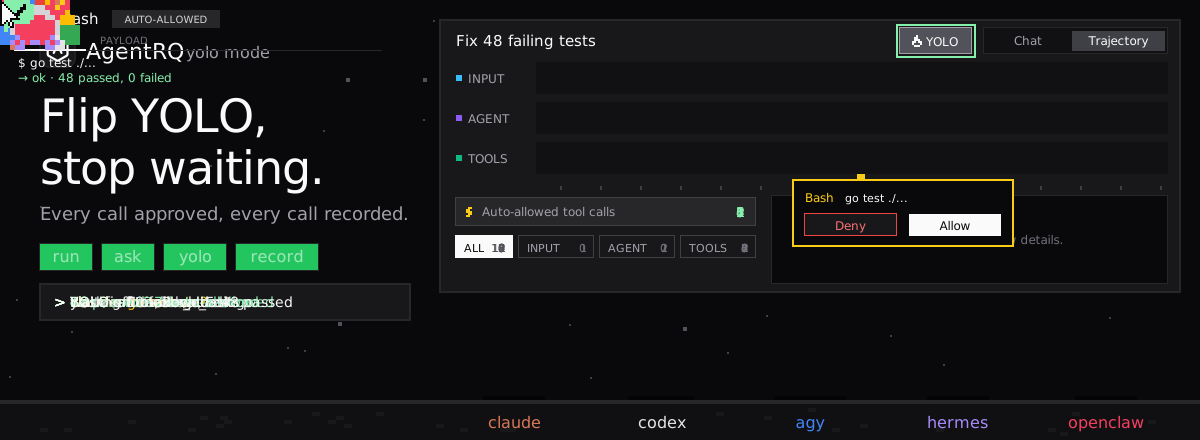
What YOLO Mode Turns Off in siGit Code
siGit Code sorts tools into two kinds. Read-only tools, such as reading files, searching and fetching a web page, always run. Mutating tools, such as writing or deleting files, shell commands and MCP tools, follow the permission policy. Auto lets the mutating ones run without asking.
Auto is not a blanket override. Deny rules in settings.toml still block, and so does Plan mode. siGit Code has no sandbox, so commands run with your own access.
How to Enable YOLO Mode in siGit Code
| Where | How |
|---|---|
| Editor (ACP) | Permissions menu: Auto |
| One run | SIGIT_PERMISSIONS=allow |
| settings.toml | [permissions] default = "allow" |
| Headless | sigit run "<prompt>" --allow-tool <name> |
The file is ~/.config/sigit/settings.toml, or $SIGIT_CONFIG_DIR/settings.toml. A fresh install has default = "ask". SIGIT_PERMISSIONS takes allow, ask or deny and overrides the stored default without writing the file.
In headless runs (sigit run), anything that would ask is denied unless you grant it with --allow-tool. --deny-tool beats any grant.
The Halfway Options
- → Session grants. At a prompt, pick always allow this session. For shell commands the grant covers the first two words, so approving
git push origin mainallowsgit pushfor the rest of the session. - → Rules.
[permissions.rules]takes orderedallowanddenylists, such asrun_command(cargo *)oredit_file(src/*). Deny is checked first. - → Per-tool settings.
[permissions.tools]sets one tool toask,allowordeny, such asrun_command = "ask". - → Plan mode.
/plan onblocks every edit and command, so siGit Code researches and presents a plan.
How to Enable YOLO Mode in siGit Code Through AgentRQ
siGit Code's own switch covers a whole session. AgentRQ lets you make the decision per task, and answer from somewhere other than the terminal.
Approve From the AgentRQ Task Instead of the Terminal
Connect siGit Code to an AgentRQ workspace through the ACP Gateway (siGit Code setup guide):
Then start the bridge with the same command minus --login. Over ACP, siGit Code offers Manual, Auto and Plan as session modes, and in Manual it sends a permission request for each mutating tool. AgentRQ keeps the session in Manual, so leave SIGIT_PERMISSIONS unset. Your allow rules and per-tool allow settings still run their tools without asking, before any request is sent. Each permission request now shows up in the AgentRQ task on the web, on your phone or in Slack, together with the command or edit it is asking about. Answer Allow Once, Always Allow or Deny from wherever you are, and siGit Code carries on. If nobody answers within 30 minutes, the gateway cancels the turn instead of guessing. Change the limit with --permission-timeout.
Turn On YOLO for One Task
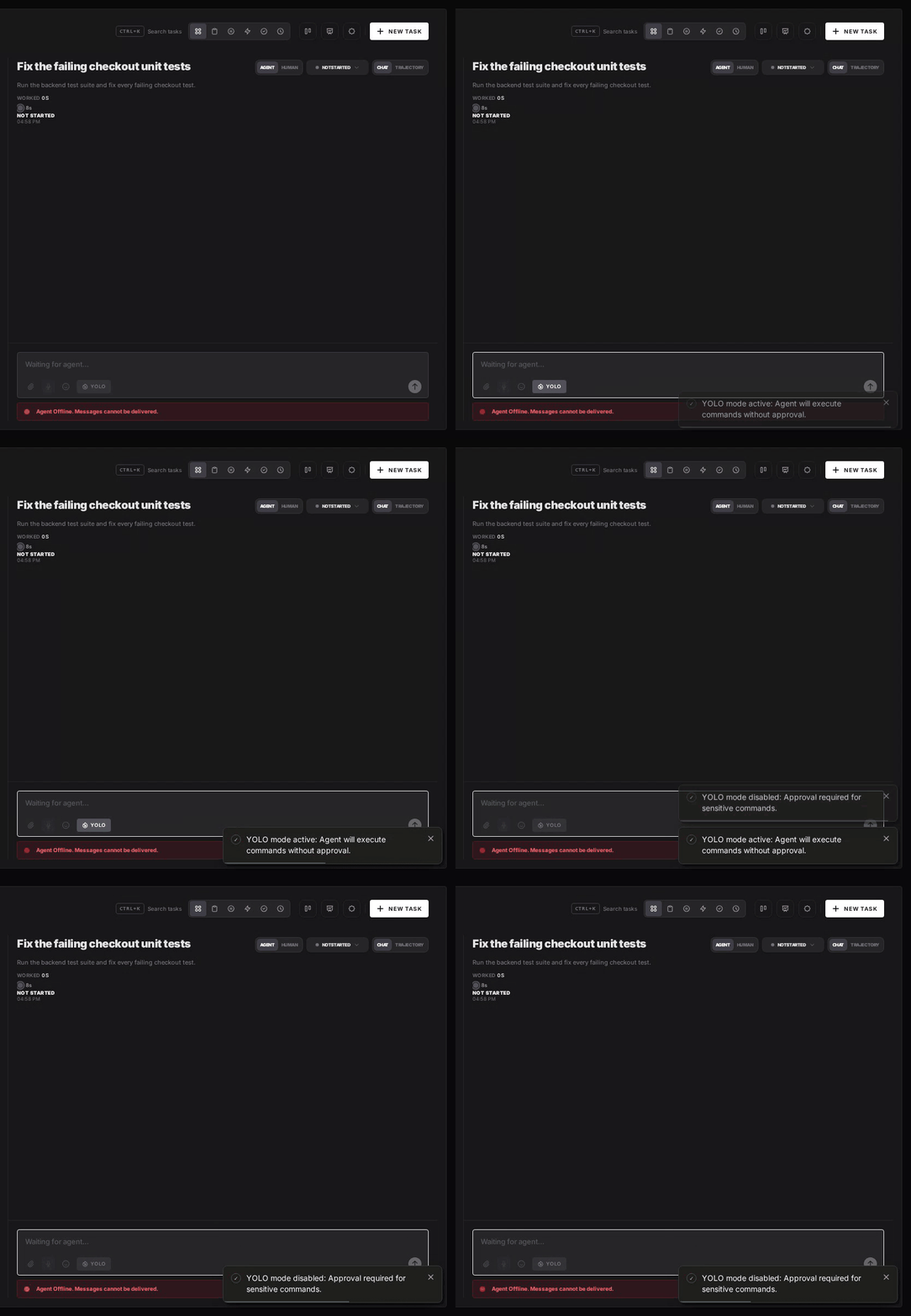
Flip the YOLO toggle on a task, or when you create it, to put just that task in YOLO mode. Every permission request in it is approved automatically and siGit Code never waits, while every other task in the workspace still asks. Scheduled tasks, event triggers and workflow steps have the same switch, so an unattended job can run in YOLO while your interactive work stays supervised.
Turn YOLO On or Off in Workspace Settings
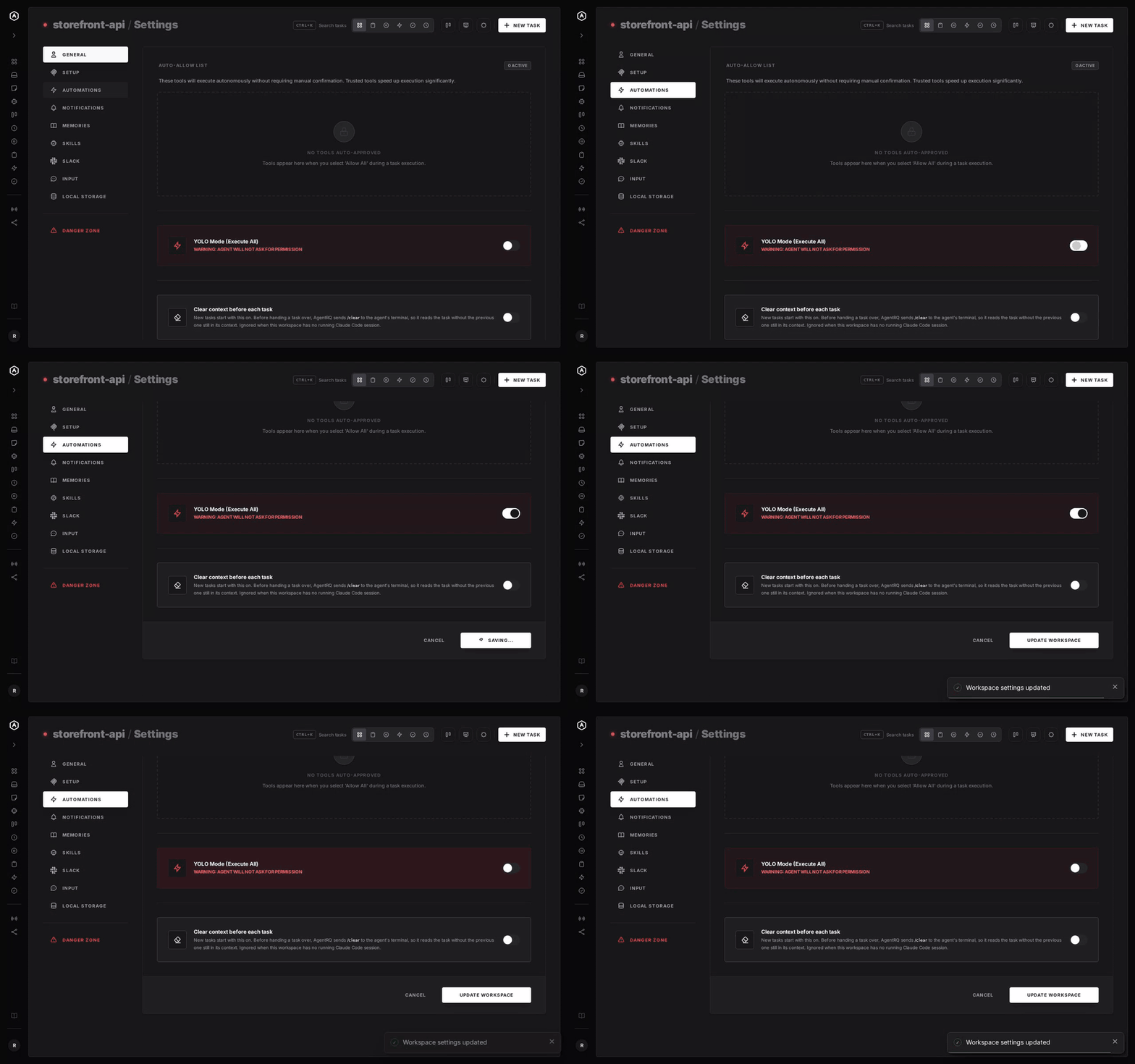
To make YOLO the default for a whole workspace, open the workspace, go to Settings, choose the Automations tab and flip YOLO Mode (Execute All). Click Update Workspace to save. Switch it off the same way. The switch is off by default, and every permission request in the workspace is approved automatically while it is on.
A Safe YOLO Setup for siGit Code
- → Allow the boring tools, not everything. Always Allow adds the tool to the workspace's auto-approved list, so the routine calls stop asking and the risky ones still do. Prune that list in workspace settings now and then.
- → Leave the workspace-wide switch off. Workspace settings also has YOLO Mode (Execute All). Turn YOLO on per task instead, so it never outlives the job you trusted.
- → Write deny rules for the dangerous ones. siGit Code checks
denybeforeallow, sorun_command(git push*)stays blocked even in a YOLO task. - → Bring your own sandbox. siGit Code has none, so run YOLO tasks in a container or a throwaway clone.
- → Commit first. Start every YOLO task from a clean git tree, so any change is one
git resetaway. - → Read the record. The tool call history lists every call the task made, including the ones that were auto-approved.
FAQ
How do I enable YOLO mode in siGit Code? Pick Auto in the editor's Permissions menu, run with SIGIT_PERMISSIONS=allow, or set default = "allow" under [permissions] in settings.toml.
Where is siGit Code's settings.toml? In ~/.config/sigit/settings.toml, or $SIGIT_CONFIG_DIR/settings.toml when that variable is set.
Does siGit Code ask before reading files? No. Read-only tools always run. Only mutating tools, such as edits, deletes, shell commands and MCP tools, follow the permission policy.
How do headless siGit Code runs handle approvals? Anything that would ask is denied, unless you grant the tool with --allow-tool. --deny-tool wins over a grant.
How do I approve siGit Code commands remotely? Connect siGit Code to AgentRQ through the ACP Gateway, in Manual mode. Its permission requests show up in the task on the web, your phone or Slack.
For every other agent, see what YOLO mode is and how to turn it on in every coding agent.